Most teams don’t struggle with leave compliance because they don’t care. They struggle because it isn’t built to be simple.
On paper, the rules are all there. Each program has its own structure, purpose, and guidelines.
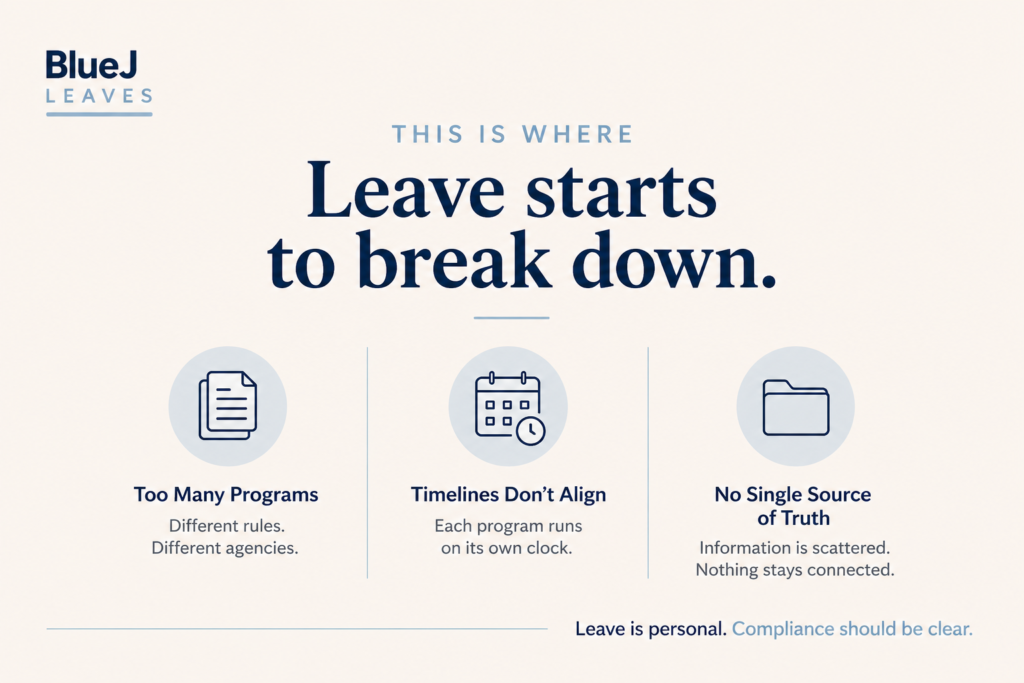
But in practice? That’s where things start to break down.
Most HR and benefits teams aren’t starting from zero.
They know:
The issue isn’t awareness.
It’s what happens when all of those things need to work together at the same time, for the same employee.
An employee goes out on leave, and suddenly multiple programs come into play:
Each one serves a purpose.
But they don’t operate as one system.
That’s where the complexity begins.
Not everything runs at the same time, or for the same reason.
So the question becomes:
What starts first?
What runs together?
What comes next?
And the answer isn’t always obvious.
Information lives in different places:
Each source gives part of the picture. But rarely the full one.
So HR teams are left piecing things together and hoping nothing gets missed.
Take a common example: maternity leave.
An employee may move through:
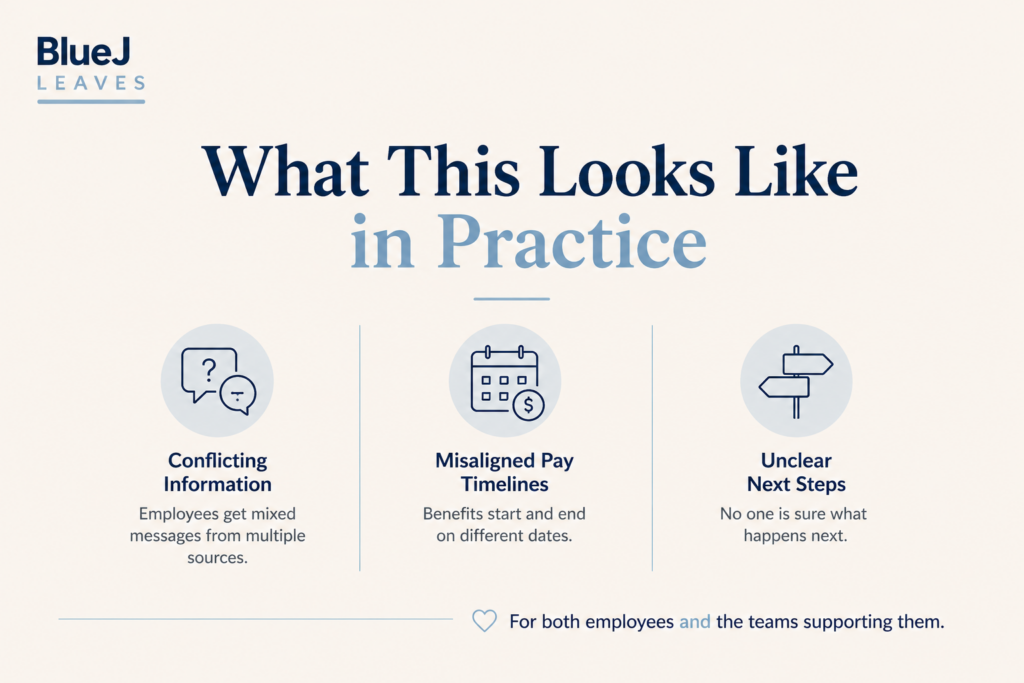
Nothing in that process is technically wrong. But without clear coordination, it can feel:
For both the employee and the team supporting them.
This isn’t just a compliance issue. It shows up in real ways:
What should feel structured starts to feel uncertain, for everyone involved.
To manage the complexity, teams often rely on:
And while those help…
They don’t solve the core issue. Because the problem isn’t just tracking what exists.
It’s understanding how everything connects.
Leave compliance doesn’t become clearer by adding more information.
It becomes clearer when:
Leave is personal.
And the moments it supports, recovery, caregiving, family matters.
Compliance should support those moments. Not make them harder to navigate.
Leave is personal. Compliance should be clear.
We’re building toward that one step at a time.